


Color Mixing With Acrylic
Description
The Ultimate Colour Mixing Masterclass
A Step-by-Step, Hands-On System for Confident Color Mixing
Do you enjoy structured, sequential, hands-on learning?
Do you struggle with mixing colors and feel unsure how to fix a mix when it goes wrong?
Color Mixing with Acrylic was designed for you.
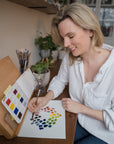
This is not a passive course. Through structured, pre-recorded lessons, you will work alongside me in real time, completing every exercise and chart step by step. By the end, you will not just understand color theory, you will know how to apply it confidently in your own painting practice.
After over a decade of teaching acrylic painting, I have seen the same color mixing struggles come up again and again. This course was built to address every single one of them.
What's Included
By the end of the course, you will have:
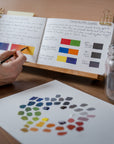
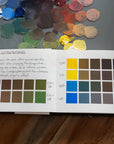
- A 26-page completed color mixing guidebook
- A deep understanding of how to adjust any color
- A personalized mixing system
- Greater confidence in your palette choices
- A permanent studio reference
- Stronger, more intentional paintings
This is not a quick tips course. It is a complete, structured system for mastering colour in acrylic.
Course Curriculum
Module 1: Introduction to Acrylic Paint & the Course
Build a Strong Foundation
In this opening module, we set up your materials, workspace, and mindset for success.
You will learn:
- How acrylic paint works (and why it behaves differently than oils)
- How to choose and read paint tubes
- Artist-grade vs. student-grade paints
- Mediums, wet palettes, and palette organization
- Why I don’t use black
- Why I don’t paint on white
- How to prepare your surfaces
- How to set yourself up for consistent results
This module eliminates confusion before you ever start mixing.
Module 2: Introduction to Colour Theory
Learn How Color Actually Works
This is where your color mixing guidebook begins.
You will work through structured, written, and painted exercises that teach you how to diagnose and fix color problems.
You will learn:
- Hue, value, and chroma
- The three dimensions of color
- Opacity and layering
- Undertones and colour bias
- Split primary palettes
- Warm vs. cool colour wheels
- Analogous and complementary colours
- How to analyze and adjust any mix
By the end of this module, you will understand why your colours behave the way they do.
Module 3: Painterly Approaches to Colour & Limited Palettes
Apply Color Theory in Real Paintings
Now you move from theory into practical application.
You will learn how to use color intentionally in your artwork.
You will learn:
- Painterly approaches to color
- How to build and use limited palettes
- How to select colors for specific subjects
- How to test and refine palettes
- How to create harmony and contrast in real paintings
This module teaches you how to translate theory into confident creative decisions.
Module 4: Introduction to Colour Charts
Build Your Personal Color Reference System
In this final module, you create a permanent colour resource for your studio.
You will complete detailed charts that show how every colour behaves.
You will create:
- Tint, tone, and shade charts
- Ultramarine and burnt umber tone studies
- Mixed blacks and neutrals
- Complementary mixes
- Individual pigment charts
- Green-mixing charts
- A complete reference system
By the end, you will have a finished, personalized color mixing guidebook you can use for years.
Bonus Training & Resources
In addition to the core curriculum, you also receive:
Technical & Skill-Building Bonuses
- Using Tools & Technology to Identify Colors
- Painting a Values Scale
- How to Light Your Art Studio (Ad-Free)
- How to Prime & Prepare Canvases (Including Aspect Ratios)
These lessons strengthen your technical foundation and support better color decisions.
Long-Form Live Painting Demonstrations
You also receive two extended, real-time painting demonstrations:
-
Mountain Sketchbook Study: Live Sunrise Painting
A multi-hour guided painting session focused on atmospheric color and light.
-
Iris Sketchbook Study: Live Floral Painting
A four-hour real-time demonstration focused on colour mixing, layering, and realism.
These are full-length, unedited demonstrations where you can watch every decision and mix in real time.
Materials Required
You will receive a full, detailed materials list after enrolling, along with guidance for substitutions. The course is designed to be accessible, even if you do not have every exact supply. The course recommends the following materials:
Paint Colours
You will work with a limited palette of eight colors:
- Quinacridone magenta
- Cadmium red medium
- Cadmium yellow medium
- Cadmium yellow light
- Phthalo blue (green shade)
- Ultramarine blue (red shade)
- Burnt umber
- Titanium white
If you do not have these exact colours, you can substitute using one warm and one cool version of each primary, plus burnt umber and white. I guide you through this process in the course, and substitute colours can be found in the course pack.
If you do not have these exact colours, you can substitute using one warm and one cool version of each primary, plus burnt umber and white. I guide you through this process in the course, and substitute colours can be found in the course pack.
Sketchbook and Paper
- An 8.5" x 5.5" watercolour sketchbook (I'm using the Strathmore Watercolour Journal)
- Larger books or loose watercolour paper may also be used with minor adjustments
Basic Tools
- Gesso
- Painter’s tape (various widths)
- Ruler, pencil, protractor, and compass
- Water jar and paper towel
- Palette tray or flat surface
- Brushes of your choice
All materials are explained in detail, and support is available if you need help finding alternatives.